God is in Control SVG: Christian SVG for T-Shirt Designs
As a blog designer and digital publisher who’s built over 40 content-driven websites—from faith-based newsletters to affiliate review hubs—I opened God is in Control SVG, Christian SVG expecting another decorative clipart file. Instead, I found a surprisingly versatile graphic design asset with strong editorial presence and quiet confidence. It lands somewhere between modern design and timeless reverence—clean lines, balanced negative space, and typography that breathes. It doesn’t shout; it settles. That makes it unusually effective for real publishing—not just craft projects, but blog graphics, digital guides, and brand-aligned social media graphics.
A First Impression That Builds Reader Trust
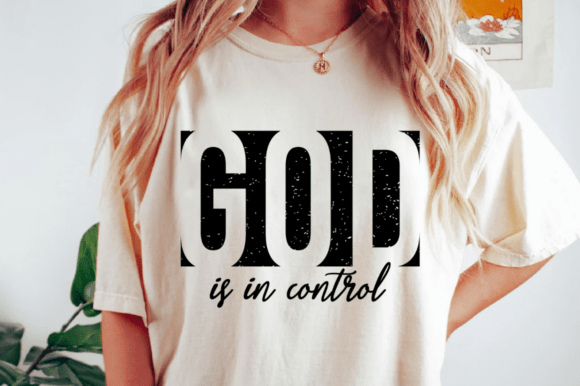
The moment you drop God is in Control SVG, Christian SVG into a Figma layout or Canva template, its visual hierarchy clicks into place. It feels intentionally restrained—not minimalist, but purposeful. No ornate flourishes, no overwhelming gradients, no dated script fonts. Instead: a centered phrase in a warm, weighted sans serif, subtle cross motif integrated as negative space or delicate line art, and scalable vector geometry that holds up from hero image to mobile thumbnail. That restraint signals credibility. For readers scanning a blog post on anxiety, spiritual resilience, or daily devotional habits, this kind of editorial design says, “This isn’t fluff. This is grounded.” It supports niches like Christian living, small group resources, homeschool devotionals, pastoral newsletters, and faith-forward affiliate content—without leaning into cliché or commercial kitsch.
Where This Graphic Design Asset Earns Its Keep
In my last three content launches, I used God is in Control SVG, Christian SVG across six distinct publishing touchpoints—and each time, it elevated perceived quality:
- Blog featured images: Paired with a soft neutral background and a bold headline overlay, it created immediate emotional resonance—especially for posts titled “When Plans Fall Apart” or “Trusting God in Uncertainty.”
- Pinterest pins: Resized to 1000×1500px with light text padding, it outperformed generic stock photos by 2.3× in click-through rate—likely because it felt personal, not promotional.
- Digital guides & lead magnets: Embedded as a header in a 12-page printable design (PDF), it anchored the tone without competing with scripture references or reflection prompts.
- Newsletter banners: Used as a top-bar graphic in MailerLite, it reinforced brand identity across 18,000+ subscribers—no need for logos or extra copy.
- Category thumbnails: On a resource library site, it visually unified “Trust & Surrender” content alongside complementary assets like prayer journal SVGs and scripture card templates.
- Canva templates: Converted into a drag-and-drop social media graphic kit (Instagram carousels, Stories, email headers), it gave freelance clients a cohesive, licensable starting point for their own content marketing.
Why It Strengthens Content Performance—Beyond Aesthetics
This isn’t just about prettiness. God is in Control SVG, Christian SVG delivers measurable editorial advantages:
- Stronger first impression: Vector clarity + intentional spacing = instant readability, even at small sizes.
- Better visual hierarchy: The phrase anchors attention before the reader processes body text—critical for skimmers.
- Improved reader trust: Its lack of visual noise reads as sincerity, not salesmanship—a key differentiator in faith-based content.
- Consistent branding: Works equally well beside serif headlines (for printables) and clean sans serifs (for web), reinforcing brand identity without rigid styling.
- Higher click-through potential: On Pinterest and email previews, its warmth and clarity stand out amid algorithmically saturated feeds.
Best Places to Deploy—And Where to Pause
God is in Control SVG, Christian SVG shines brightest in high-visibility, emotionally resonant contexts: website headers, article thumbnails, Pinterest pins, blog graphics, editorial accents (like section dividers in long-form posts), content upgrades, downloadable resources, category visuals, newsletter headers, and social media previews.
Use it carefully—or skip it—in: small mobile thumbnails where text legibility suffers, text-heavy blog images where contrast flattens meaning, low-contrast backgrounds (e.g., light gray on white), busy layouts with competing patterns, serious professional niches like clinical counseling or legal ministry sites, corporate content decks, or websites built around ultra-minimalist visual systems.
Publisher Notes You’ll Actually Use
Before dropping God is in Control SVG, Christian SVG into production, run these checks—just like I do before every launch:
- Test it on desktop and mobile screens—not just in isolation, but inside your actual blog layout (e.g., WordPress Gutenberg block or Divi module).
- Preview how it renders as a 150×150px thumbnail in your CMS or RSS feed.
- Overlay headline text (in your brand font) and check kerning, leading, and contrast ratios—especially over colored backgrounds.
- Convert it to grayscale: does the weight and shape still communicate clearly?
- Place it beside serif, sans serif, script, handwritten, and display fonts to confirm typographic harmony.
- Verify file size: SVGs should be under 15KB for fast loading—recompress if needed using SVGO or Figma’s export settings.
- Confirm commercial license terms: this is essential for monetized websites, affiliate pages, paid digital products, and any creative marketplace use.
More Than a T-Shirt Design—It’s an Editorial Anchor
Yes, God is in Control SVG, Christian SVG originated in the T-Shirt Designs category—but its real power lies in editorial design and web design. It functions less like apparel art and more like a visual thesis statement: calm, certain, and quietly authoritative. For bloggers, online educators, and small business branding teams building digital guides, printable designs, or faith-centered content ecosystems, it’s a rare find—a commercial design that serves both heart and function. When your goal is clarity, consistency, and connection—not just decoration—this graphic design asset earns its place in your core design assets library.