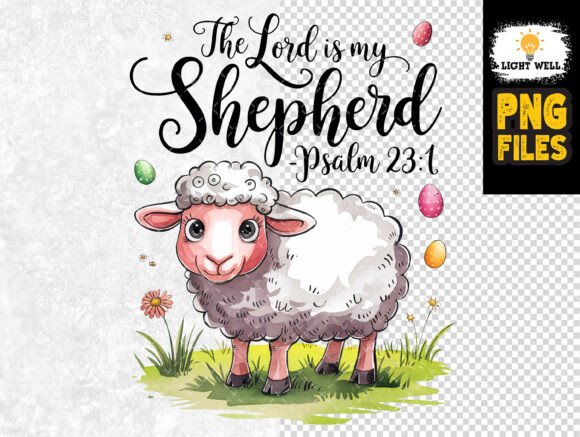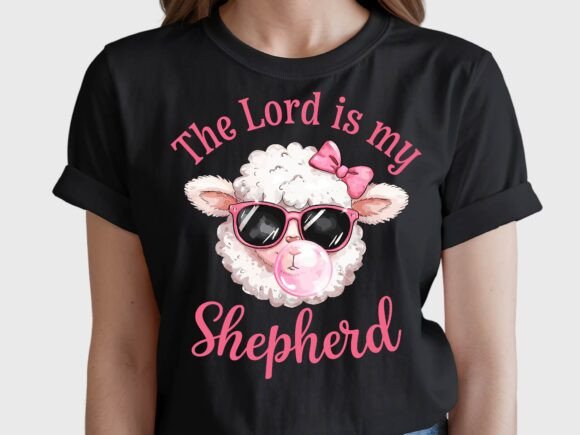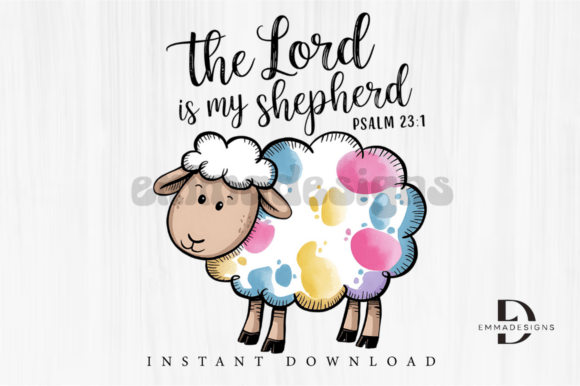
The Lord is My Shepherd PNG, Christian
A Quiet Strength That Stitches Well
When I opened The Lord is My Shepherd PNG, Christian for the first time, what struck me wasn’t flash or ornament—it was calm intention. The composition leans into gentle symmetry: a soft shepherd figure centered above a simple, flowing script line of “The Lord is My Shepherd.” No halos, no ornate borders, no heavy scrollwork—just clean lines, balanced negative space, and a quiet reverence that reads clearly at 3–4 inches wide. It’s the kind of design that feels like it belongs on a linen tea towel handed to a new parent, not a loud graphic tee. That matters—because in embroidery, mood isn’t just aesthetic; it’s functional.
Where It Lives Best (and Why)
I recently used The Lord is My Shepherd PNG, Christian on a set of organic cotton baby swaddles for a boutique nursery line—and it landed perfectly. The moderate detail level held up beautifully in a 4.5-inch hoop with medium-weight tear-away stabilizer. The script remained legible, the figure retained its soft silhouette, and the overall stitch density avoided puckering on the delicate fabric. It also translated well onto a heavyweight cotton tote bag for a church gift shop: crisp in satin stitch for the outline, subtle fill for the figure, and zero thread breaks across 20+ repeats.
This design naturally suits products where meaning and tactility align: embroidered pillow covers for hospice care gifts, minimalist aprons for faith-based bakeries, small patches sewn onto denim jackets for youth groups, or even subtle sweatshirt embroidery just above the left chest. Its restraint makes it versatile—but not universal. It won’t pop on a neon mesh cap or carry weight on a 1.5-inch hat front. And while it’s labeled under T-Shirt Designs, it’s honestly *better* suited to structured, low-stretch items than standard tees.
Fabrics and Surfaces: Know When to Pause
Here’s where real-world testing matters: The Lord is My Shepherd PNG, Christian needs thoughtful pairing. On thin or stretchy knits (like lightweight jersey tees), the fine interior lines of the shepherd’s staff or the curve of the script can blur unless you add cutaway stabilizer *and* reduce stitch speed. On dark fabric, light-colored thread works—but only if you check contrast in natural light, not just on screen. I once stitched it in ecru on navy fleece and loved the warmth—until washing revealed slight shadowing from dense fill areas. A lighter fill stitch density would’ve helped.
Curved surfaces like caps or curved pillow edges demand extra attention too. The design’s horizontal orientation means it flows naturally on flat or gently contoured surfaces—but compresses awkwardly on deeply rounded fronts without manual digitizing adjustments. And tiny corners? The lower curve of the script near “Shepherd” has a tight radius. On ultra-fine fabrics or with metallic thread, that spot may need a slight manual cleanup or reduced density to avoid skipped stitches.
What It Adds to Your Finished Product
This isn’t just decoration—it’s emotional resonance with craft integrity. When customers see The Lord is My Shepherd PNG, Christian on a handmade product, they register care: in the spacing, the proportion, the absence of visual noise. That builds trust. For Etsy sellers and small shop owners, that translates to fewer returns, more repeat buyers, and stronger brand consistency—especially if you pair it with other quiet, meaningful designs in your catalog. It elevates a basic kitchen towel into a personalized gift. It grounds a holiday embroidery collection in sincerity, not sentimentality.
But don’t mistake simplicity for low effort. Its clarity depends on execution: proper thread tension, accurate hooping, and fabric-appropriate stabilizer. A rushed run on unstable fabric will mute its strength—not because the design fails, but because embroidery is a partnership between file and maker.
Practical Designer Notes Before You Stitch
- Always test first—on scrap fabric matching your final project’s weight and stretch.
- Check thread color contrast in both daylight and indoor lighting; soft grays or heathers can swallow fine details.
- Review stitch density—if your machine struggles with dense fills, consider simplifying background elements or reducing fill % manually.
- Confirm hoop size compatibility—this design fits comfortably in a 5x7 hoop, but verify before batching.
- Inspect small details—especially the script’s terminals and the shepherd’s profile edge—under magnification if needed.
- Test black-and-white mockups to assess value contrast before committing to thread colors.
- Compare light/dark backgrounds—some thread combos read differently on oatmeal vs. charcoal.
- Use stabilizer appropriate for fabric texture—tear-away for stable wovens, cutaway for knits or fleece.
- Verify licensing before selling finished embroidered items or bundling as digital embroidery files—commercial use rights aren’t implied by category alone.
Final Thought: A Design That Earns Its Place
The Lord is My Shepherd PNG, Christian doesn’t shout. It settles—in the hand-stitched hem of a baptismal blanket, the quiet corner of a counselor’s office pillow, the inside tag of a handmade apron. That’s its strength. For embroidery designers, craft business owners, and makers who value intention over impulse, it’s a reliable, respectful asset—not a trend piece. Used thoughtfully, it supports your craftsmanship instead of competing with it. And in a market full of busy, over-digitized files, that kind of quiet confidence is rare. And worth stitching slowly.